GT

Saturday, June 27, 2026

How to build your own homelab and start self-hosting!

 Sharing here a presentation I did recently on how to build your own homelab (home server) to host your own applications.


Build Your Own Home Lab: Take Control of Your Digital Life! 🏠💻


Ever wondered how to run your own “mini data center” at home?


In this session we’ll explore the basics of building a general-purpose home lab—from choosing the right hardware to running powerful self-hosted services right from your own home.

💡 Why self-host?
- Take full control of your data 🔐
- Reduce (or eliminate!) monthly subscriptions 💸
- Improve your data access, reliability and redundancy ⚡
- Learn awesome real-world tech skills

We’ll cover:
🖥️ Hardware basics — what you actually need (and what you don’t)
🧠 Software stack — how to bring everything together

And we’ll demo some cool services you can run yourself:
📦 NAS — your own private cloud storage
🏡 Home Assistant — automate your home like a pro
🎥 Frigate DVR — smart AI-powered security cameras
🎬 Plex Media Server — your personal Netflix
🎧 Audiobookshelf — manage your audiobook library
🌐 NGINX Proxy Manager — clean, simple access to your services
🛡️ OPNsense — build your own powerful router/firewall
📁 Filebrowser — your own Google Drive alternative
🖥️ Ollama - your own private ChatGPT

Whether you’re just curious or already tinkering, this session will give you the tools and inspiration to start building your own home lab.

👉 Warning: Side effects may include excessive tinkering, upgrading hardware, and never trusting cloud subscriptions the same way again


Saturday, September 21, 2024

Keeping and 486 and Pentium PCs going - A few Repairs and Mods

I grew up with PCs. My first one was a 486DX-33Mhz with 4Mb of RAM (I still have the order sheet somewhere) which was an ok machine at that time (1994). I had a lot of fun with that machine, it served me well for almost 2 years, when it got replaced by a much more powerful Pentium 100MHz with 16Mb of RAM, which was later paired with a Sound Blaster AWE 32 with 2Mb or RAM!

Here is a shot of my first PC Tower (extra points if you guess the game on the screen):

My very first 486 PC on display - circa 1994

Sunday, September 3, 2023

Technics Cassette Deck RS-BX828 Maintenance and Mod

The RS-BX828 cassette deck from Technics is a high-end model released in the early 90's. It features 3 Heads, Direct Drive mechanism and 3 DC motors being 1 quartz direct-drive motor for the reel, one for the capstan and one motor for opening and closing the cassette compartment.

Such robust motor construction allows for a very small wow and flutter of just 0.03%. 

The Technics RS-BX828

Monday, February 20, 2023

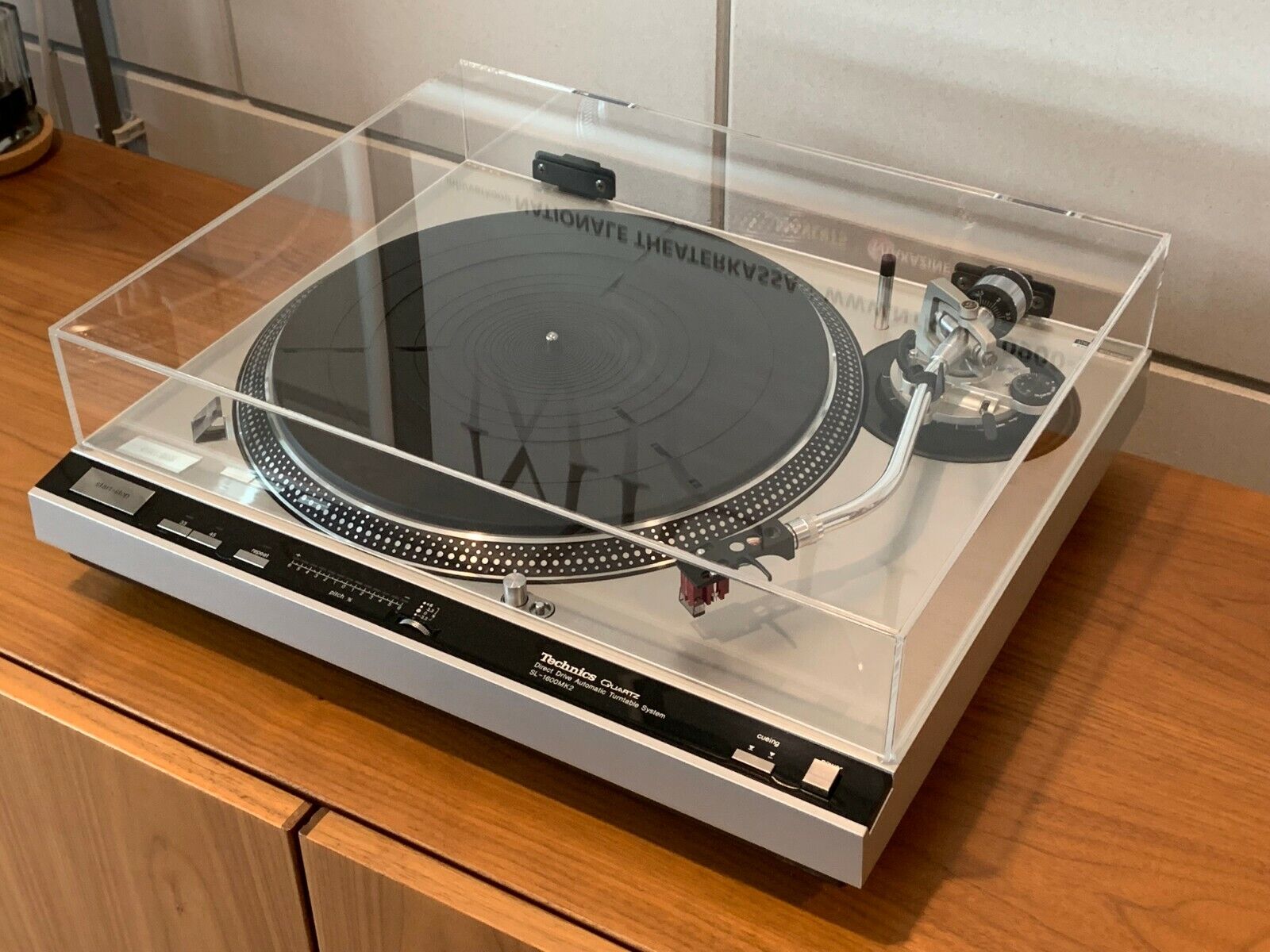
Repairing a "mute" Technics SL-1600MK2 turntable

 The Technics SL-1600MK2 is basically an older brother of the famous SL-1200MK2. It has an identical heavy platter and a similar overall body weight. On top of the robustness and features of its younger and famous sibling, it has the benefit (to some, a downside) of an auto-return, soft touch buttons for cueing.

A nice shot of a SL-1600MK2

Unlike its popular cousin, the SL-1600 series were only manufactured from 1977 to 1981, meaning all models you may be lucky to find on the market are over 40 years old. Adding to the fact that this model has a more complex circuit board, tone arm and cuing mechanisms, proper maintenance is a must to keep this turntable spinning!

Monday, January 10, 2022

The fun (and never ending) 3D printer upgrades and mods

First of all, Happy 2022 everyone!


It has been a long time since my last post, to compensate this will be a long and detailed post about the 3D printer upgrades I installed in the last 18 months. 

Before acquiring my 3D printer back in mid-2020, I researched through several articles and reviews for a while. I was looking for a competent, relatively reliable entry-level FDM/FFM printer with future upgrade potential that would not break the bank (after all, my printer would not be used often, just as a hobby really). 

Although there are options of 3D printers the come completely assembled, I was not afraid to opt for a DIY model, where some initial assembly is needed. I ended up narrowing my search down to the Chinese brand Creality and ultimately to their Ender 3 v2 model. 

My heavily modded Ender 3v2

Monday, March 8, 2021

Repairing the king! Bringing a Sony D-Z555 back to life and giving it a new rechargeable battery

Like many others that grew up in the 80s/90s, you probably have fond memories of going to school listening to your Sony Walkman or later on their Discman. Among the many models of portables that Sony made over the years, a few top of the line models remain in the minds of collectors and audiophiles alike as the best sounding portables ever made. Walkmans like the WM-DD9, WM-DD100, WM-DC2 with the king in terms of sound being the (semi-portable) WM-DC6 - which reigns as one of the best portable cassette players ever made.

On the realm of digital music, Sony had their Discman series. This line has a few players that commonly make the top of the list of the best players ever made are the D-Z555 (also called D555), D10/D100, D35, D303 and D350. More often than not, the throne of the best Discman ever made goes to the D-Z555 for a combination of features, looks and sound quality.

Note that the best portable disc players were made in the early 90s and below, when it was considered a luxury item made for audiophiles. When the Discman became more main stream, some features were added such as ESP (Electronic Shock Protection) or later MP3 discs playback, but with these new "features" it came price cuts and the end of their high-end units.  

The Sony D-Z555 was released in 1989 and it features not one but two (!) backlit LCDs displays, one of the displays spotting a spectrum analyzer (how cool is that for a portable!?). Inside the unit, you will find two audiophile-grade PCM66P DACs and for the very first time on a portable and consumer device: 8 times oversampling and a DSP chip. The player also spot a digital optical output (which was a very new technology in 1990, especially on a portable unit!), a remote port (for an optional IR remote) and line out. 


The Sony D-Z555 (or D-555) and it's 2 backlit LCD displays in action
PS: testing it with a great game soundtrack from the time the D-Z555 was released (1990)!

Monday, February 15, 2021

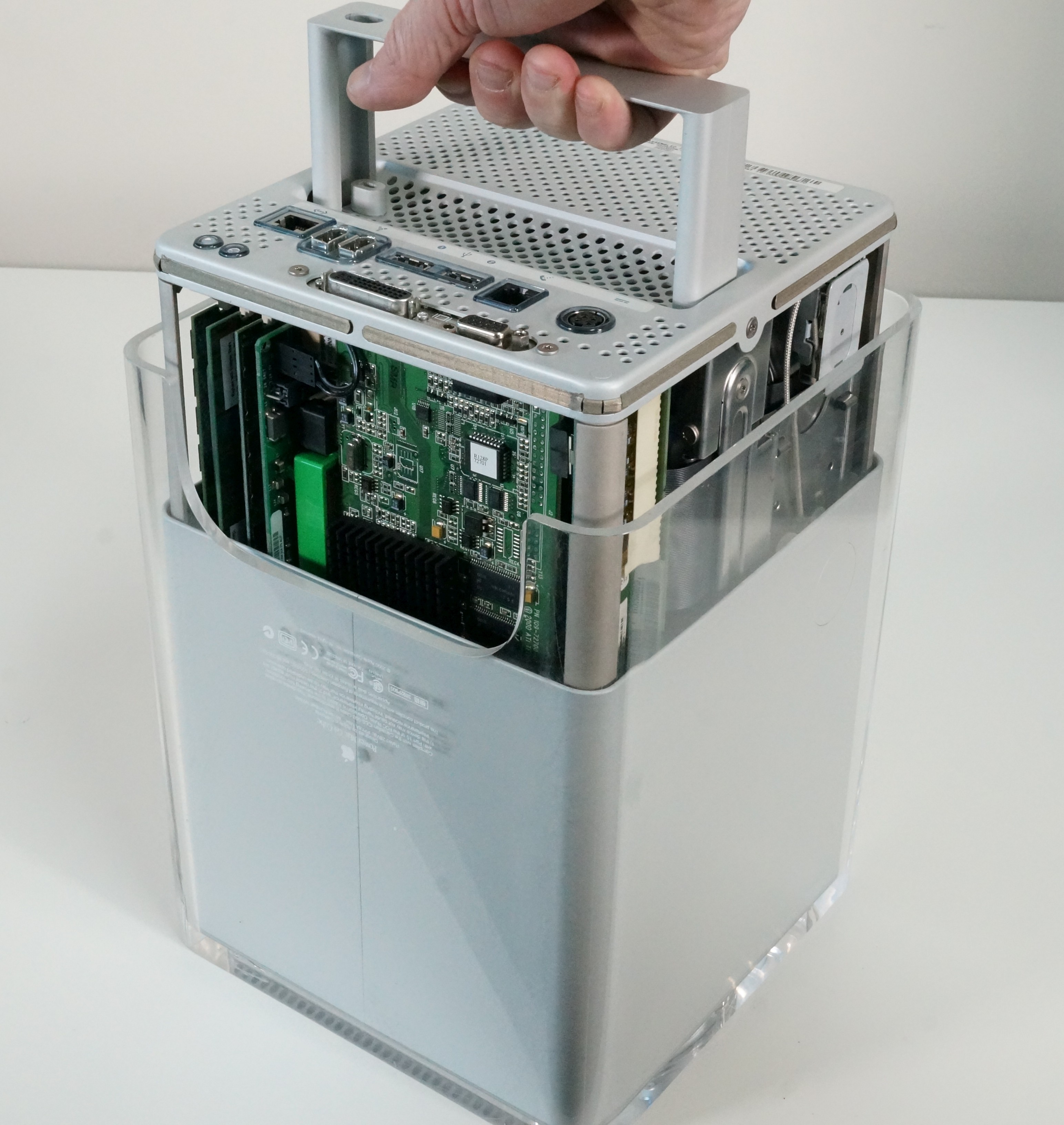
Power Mac G4 Cube - Power Supply replacement


The Power Mac G4 Cube is a very unique Apple computer, with its special and compact desktop (for the time at least) "cube" form factor. It features  easy access to its internal components for (some) upgrades, but mostly, this accessibility is used to show off to your friends and family. 
Unfortunately, it ended up being a commercial failure due to lack of specific market focus and higher price compared to other Apple products of its time with similar or higher specs. Thus, it had a very short life span, being produced only between July 2000 and July 2001 what today lead to a somewhat rare and collectible Mac.


The Cube, like most Apple products, is a solid machine and if you are lucky enough to find a reasonably priced one, most units tend to be working to this day. Among the non-working ones available, chances are that it's because of its power supply (PSU) being dead. Sadly, the Cube PSU is custom made for the Cube, using a proprietary connector cable - making it very rare / expensive to find a plug and play replacement. 

Thankfully, you are lucky enough to come across this article! :)